

48 hours only! Get 20% off progressive lenses | Use code: GET20


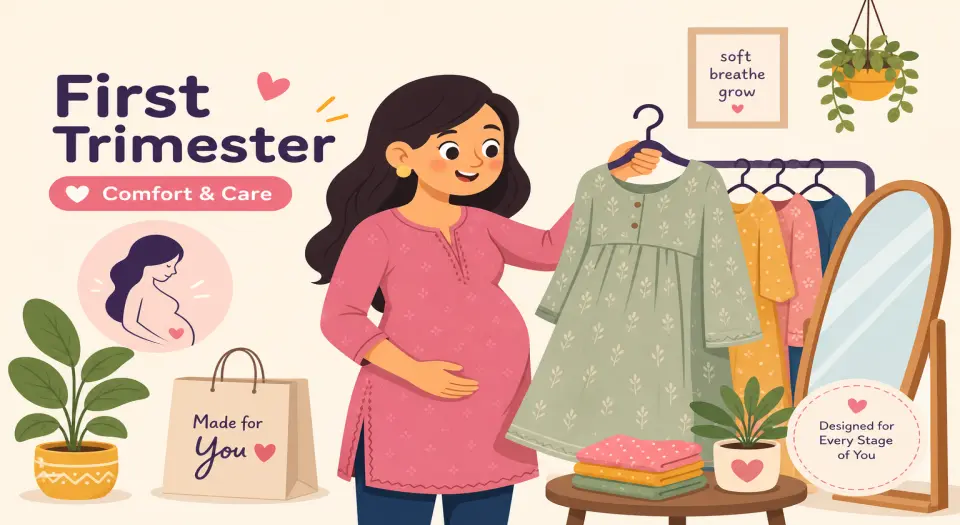
Maternity clothes for your first trimester in Bangladesh
June 01, 2026
If you've been wondering what maternity clothes you need for the first trimester in Bangladesh, you're probably already feeling it before you can see it. You reach for your favourite salwar kameez, the one that always fits just right, and suddenly the neckline feels tight against your chest and the waistband is doing something deeply unpleasant. Your belly isn't showing yet. Nobody around you can tell anything has changed. But your body absolutely knows, and it has opinions about your wardrobe. For many women, these changes begin as early as weeks four or five, though the timing varies from person to person.
That quiet, confusing discomfort is the first trimester doing its thing. Most pregnancy fashion guides jump straight to the third-trimester bump and leave you to figure out the early weeks on your own. This guide doesn't do that. What follows is a practical, Bangladesh-specific breakdown of exactly which maternity clothes to buy for the first trimester, how many to get, which fabrics actually survive Dhaka's heat, and how to do all of it without spending more than you need to. Whether you're shopping online at midnight or planning your first visit to a maternity store, consider this your checklist.
What your body is actually doing in weeks 1 to 12
Before we talk about what to buy, it helps to understand why you need it. The first trimester isn't just about a growing belly. Most of the changes happening right now are invisible from the outside but very real from the inside. For an authoritative medical overview of what to expect during these early weeks, see Hopkins Medicine's guide to the first trimester.
Your breasts change before anything else
Breast tenderness and swelling often start as early as week four or five, before most women even know they're pregnant. The tissue becomes sensitive almost overnight, and a bra that felt perfectly comfortable last month can suddenly feel like a mild form of punishment. This is the first clothing-related change that actually needs addressing, and it's worth treating it as urgent rather than something to push through. A clinical review of early pregnancy physiological changes describes these breast adaptations and why soft, supportive innerwear becomes necessary so quickly.
The waistband problem arrives before any bump does
Bloating and lower abdominal tightening are some of the most common and least talked-about first-trimester symptoms. This isn't bump growth yet; it's your digestive system slowing down and your uterus beginning to expand, and it makes anything with a firm waistband feel uncomfortable far earlier than you'd expect. Stretchy waistbands stop being a nice-to-have and become a genuine daily need early in the first trimester for many women, though exactly when varies. Some notice it as early as weeks six or seven; others have a little more time.
Fatigue and nausea reshape how dressing feels
When you're exhausted and nauseous for weeks on end, anything fiddly or restrictive feels like too much effort. Heavy fabrics, stiff seams, and complicated fastenings all become obstacles. Frequent urination also means you're removing and replacing clothing more often than usual, so easy-on, easy-off designs with forgiving waistbands aren't a luxury right now. They're a practical daily necessity. For practical advice on coping with these symptoms in the first trimester, see resources on navigating first-trimester symptoms.
The fabrics that actually work in Bangladesh's heat and humidity
Choosing the right fabric matters everywhere, but it matters especially in Bangladesh, where the combination of heat, humidity, and a body that's already running warmer than usual can make certain synthetics genuinely uncomfortable, particularly heavy, poorly ventilated polyester blends that trap heat and don't breathe.
Cotton is the non-negotiable first choice
Lightweight cotton is breathable, absorbs moisture, and feels soft against sensitive skin. In Bangladesh's climate, those three qualities together make it the obvious default for everyday maternity wear. Cotton kameez and cotton-knit tops are the safest all-weather bet, and they hold up well through regular washing, which matters when you're living in your clothes during a long, humid pregnancy.
When modal, rayon, and stretch blends earn their place
Lightweight modal is smooth, soft, and can be breathable in indoor settings, making it worth considering for slightly cooler environments or nightwear. Rayon drapes well, feels cool against the skin, and works nicely for casual and home wear during warmer months. For bottoms, a cotton-spandex blend gives you the stretch your changing waistline needs while keeping most of cotton's comfort. What to avoid: heavy polyester blends, thick synthetics, and anything that feels stiff or poorly ventilated in a shop. If a fabric feels warm and scratchy in an air-conditioned store, it's likely to be even more uncomfortable on a humid Dhaka afternoon, so trust that in-store test and choose accordingly. For a focussed overview of breathable choices in hot climates, see this guide to the best fabrics for maternity clothing in hot climates.
What maternity clothes do you need for the first trimester in Bangladesh? A practical checklist
Here's the practical part. These numbers are based on what most women actually need to get through the first trimester comfortably, without buying a full wardrobe before your bump has even arrived.
Bras and innerwear: start here before anything else
This is the category to prioritise above everything else. Aim for three to five soft-cup or maternity bras with wide straps and breathable fabric. Many women find non-underwire or soft-wire styles more comfortable during pregnancy, though comfort is personal, the key is finding a fit that doesn't press against sensitive tissue. Your size will likely continue changing throughout your pregnancy, so don't overbuy now, but having a few properly fitting bras makes a real difference to daily comfort. For underwear, seven pairs of seamless or maternity-cut styles is a practical starting quantity because you'll be washing more frequently and you want something comfortable around a waistline that's in flux.
Bottoms: two or three pairs go a long way
You don't need a full wardrobe of maternity bottoms in the first trimester. Two to four pairs are enough: a mix of stretchy waistband pants, palazzo trousers, or maternity leggings covers most situations. The stretchy waistband is the key feature here, not a maternity-specific panel (those become more useful later). This is also the category where most women first realise their regular clothes have stopped working, so it's worth addressing early.
Tops, kameez, and everyday wear
Five to seven loose tops or kameez in breathable fabrics will carry you through the first trimester and well into the second. A-line and straight cuts give you room at the chest and waist without looking shapeless or obviously maternity-specific. This category also overlaps nicely with modest dressing preferences, because the cuts that work best for early pregnancy are largely the same ones that work best for modesty and full coverage.
Sleepwear and home wear
This is the most overlooked category and one of the most important. When fatigue and nausea dominate your evenings, what you wear at home matters more than what you wear outside. Two to three sets of soft, loose sleepwear, lightweight cotton nightdresses or salwar sets, give you something comfortable to collapse into after a long day. Don't skip this one.
Local styles that fit Bangladesh's climate and culture
One advantage of shopping in Bangladesh for maternity wear is that many traditional styles already align naturally with what a pregnant body needs. You're not trying to adapt foreign cuts to local preferences; the local cuts are already doing most of the right things.
Why the maternity kurti is the smartest first buy
The maternity kurti offers modesty, full coverage, and the versatility to work for both outdoor errands and family visits at home. Versions with side-stretch panels or empire-waist cuts accommodate early body changes without needing much alteration. It's the most culturally natural and practically functional piece you can add to your first-trimester wardrobe, and it's widely available across dedicated maternity retailers in Bangladesh, both online and in-store.
Maxi dresses, kaftans, and palazzo sets for all-day comfort
Maxi dresses are loose, breathable, and flexible enough for both casual days and more formal occasions, which makes them useful rather than just comfortable. Kaftans have become particularly popular for home wear and family visits because they require no thought and feel like wearing almost nothing in the heat. Palazzo-and-top sets give you a put-together look while keeping your waist completely unrestricted. If a friend who'd been through a Bangladeshi pregnancy sat down with you and listed her most-reached-for items, these three styles would almost certainly top the list.
How to stretch what you already own before buying everything new
Not everything needs replacing right away. Part of shopping smartly for first-trimester maternity clothes in Bangladesh is knowing which of your existing clothes can still work for you and which ones genuinely can't.
The belly band workaround
A belly band is a stretchy, tube-shaped piece of fabric that covers the gap when you wear your regular trousers unbuttoned. It's a useful bridge strategy for the early weeks when your waist is expanding but you don't yet need a full maternity cut. It stops working well once bloating becomes a consistent daily issue rather than an occasional one, usually somewhere between weeks eight and twelve, but it can delay the need for new bottoms by a few weeks.
Which regular clothes naturally work in the first trimester
Loose kameez, oversized tops, wrap-style dresses, and anything with a drawstring waist can all continue serving you well through much of the first trimester. Many everyday Bangladeshi wardrobe staples are already generous in cut, which means your existing clothes may cover more of this period than you'd expect. A simple test: if a garment has no tight elastic at the waist and no stiff seams across the chest, it may still have several more weeks of wear in it before you need to replace it.
Where to shop and what to expect to spend
Having a budget in mind before you shop saves you from overspending on things you don't need yet, or underspending and ending up uncomfortable.
A realistic budget breakdown for the first trimester
A minimal starter wardrobe, covering a couple of bras, a few comfortable bottoms, and some basic tops, typically comes in at around ৳2,000 to ৳5,000 if you keep to essentials. A more complete set with better-quality fabrics and more pieces across all the categories covered above usually falls in the ৳5,000 to ৳15,000 range. The first trimester does not require buying everything at once. Start with the bras and one or two comfortable bottoms, then build from there as your needs become clearer.
Why a curated starter set saves more than money
The hardest part of first-trimester shopping isn't the budget. It's the decision fatigue. You're tired, possibly nauseous, and being asked to predict what your body will need over the next few months, when you've never been through this before. That's where a trusted local option helps. MaaMio's maternity collection is designed around exactly this kind of early-pregnancy uncertainty, with innerwear, comfortable bottoms, and breathable tops already brought together so you don't have to research every fabric and guess every quantity. The thinking has been done for you.
Other options for comparison
Daraz is a useful marketplace if you want to compare prices across sellers before committing. Local tailors are worth considering if you have specific sizing needs and want a custom kurti or salwar set made to your measurements. Both are reasonable reference points, but for a first-time buyer who wants reliability and curation rather than scrolling through hundreds of listings, a dedicated maternity store is a more efficient place to start.
What maternity clothes do you need for the first trimester in Bangladesh? Start here
The first trimester is already asking a lot of you. Your body is doing extraordinary things quietly and uncomfortably, and you're expected to keep going with your normal life while it happens. Getting your clothing sorted isn't a small thing. When you feel physically at ease, everything else becomes slightly more manageable.
Start with the two purchases that make the biggest immediate difference: a properly fitting soft-cup bra and one or two comfortable bottoms with a forgiving waistband. Build from there as the weeks progress. You don't need a full wardrobe yet, just enough to get through each day without fighting your clothes.
If you'd rather skip the research and let someone reliable put the right pieces together for you, MaaMio's maternity range is a practical place to begin. Browse what's available, check the fabric details, and shop somewhere that actually understands what this stage of pregnancy needs. Your comfort matters, and it's worth making it a priority right now.